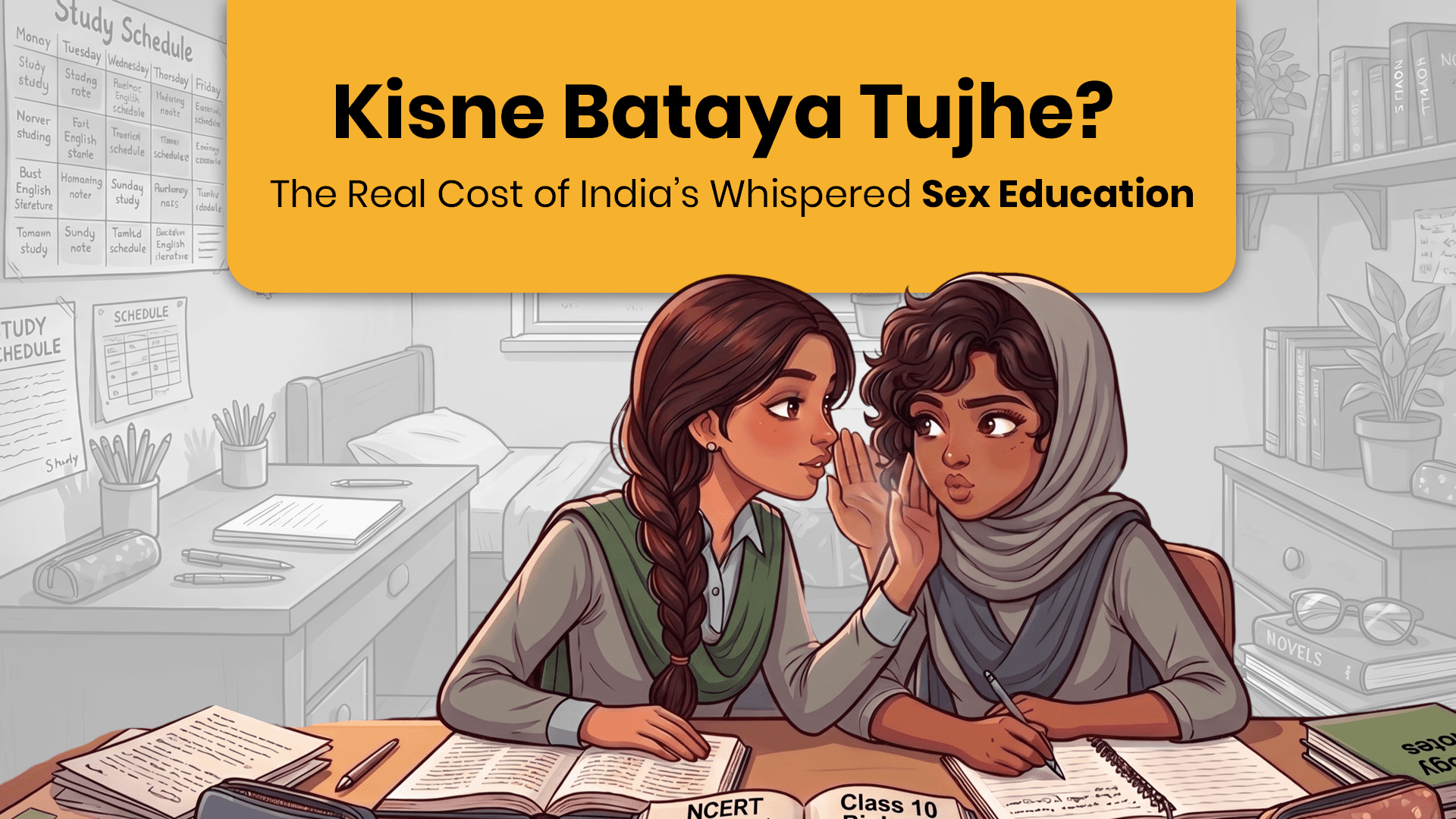
Here is a scene most of us recognise. A biology teacher reaches the chapter on human reproduction. The class goes quiet. Someone giggles. The teacher says, "Read this chapter at home," and moves on to the digestive system. The chapter is skipped. Conversation is avoided. Doubt is left to Google.
For most young people in India, that is what sex education is. Not a conversation. Not a learning moment. Just an awkward silence followed by a lifetime of guessing.
Sochne wali baat: If the classroom will not teach them, who exactly do we think will?
The answer is already here, and it is not reassuring. When schools skip the chapter and parents change the TV channel, the internet steps in. And the internet does not teach biology. It teaches pornography. A 14-year-old searching for "what happens during sex" does not land on a health website. He lands on content that is violent, unrealistic, and completely disconnected from consent, respect, or reality. That becomes his textbook. Her textbook too, sometimes.
We then act surprised when teenagers do not understand contraception, think pulling out is a method, or believe that a girl cannot get pregnant the first time. We ask, Kisne bataya tujhe, when things go wrong. The honest answer? Nobody. Nobody bataya. That is the whole problem.
Zara sochiye: We lock the front door but leave every window open -then blame the child for the draught.
India has over 250 million adolescents - one of the largest young populations on the planet. Most of them will go through puberty, form relationships, and make decisions about their bodies with almost no reliable information. What fills that gap? Friends who know as little as they do. Older cousins who mix facts with myths. And WhatsApp forwards that could not tell the difference between a uterus and a universe.
The result? Teenage pregnancies that could have been prevented. Sexually transmitted infections that could have been avoided. And a generation carrying shame for things they were never taught to understand.
Prevention programmes that actually work - in India and globally - share a few key features. They do not preach. They present facts. They discuss consent, boundaries, and respect alongside biology. They treat young people as capable of making informed choices, not as problems waiting to happen. And they involve families without turning the conversation into a moral lecture.
Age-appropriate does not mean watered down. It means a 10-year-old learns about body safety and boundaries. A 13-year-old learns about puberty without shame. A 16-year-old learns about contraception, consent, and healthy relationships. None of this is radical. All of it is overdue.
Think about this: Is it more dangerous to talk to your child about sex, or to let a stranger on the internet do it for you?
A Word for Parents
We get it. This is uncomfortable. You grew up at a time when these topics were not discussed, and you turned out fine. But your child is growing up with a smartphone that has no parental filter on curiosity. The question is not whether they will learn about sex. They will. The question is whether they learn it from you - calmly, correctly, with care - or from a source that has no interest in their wellbeing.
You do not need to give a lecture. Start small. Answer their questions. Do not panic if a question surprises you. A child who receives honest answers at home does not need to look for unreliable ones elsewhere.
Ruk ke socho: The most important sex education your child will ever receive is knowing that you are not too scared to talk about it.
TSSF team is eager to hear from you - write to us at info@sunitisolomon.org or call us at 044-28363200.
#SexEducationIndia #ComprehensiveSexEd #AdolescentHealth #TeenHealthIndia #YouthAwareness #ConsentEducation #SafeSexEducation #ReproductiveHealth #PubertyEducation #BreakTheSilence #TalkToYourKids #ParentingInIndia #HealthEducation #PreventTeenPregnancy #STIAwareness #DigitalInfluence #InternetAndYouth #MythVsFact #KnowTheFacts #HealthyRelationships #BodyAwareness #PublicHealthIndia #InformedYouth #NoMoreTaboos #OpenConversations #EmpowerYoungPeople #LifeSkillsEducation #AwarenessMatters #ResponsibleParenting #EducationForAll #TSSFBlogs