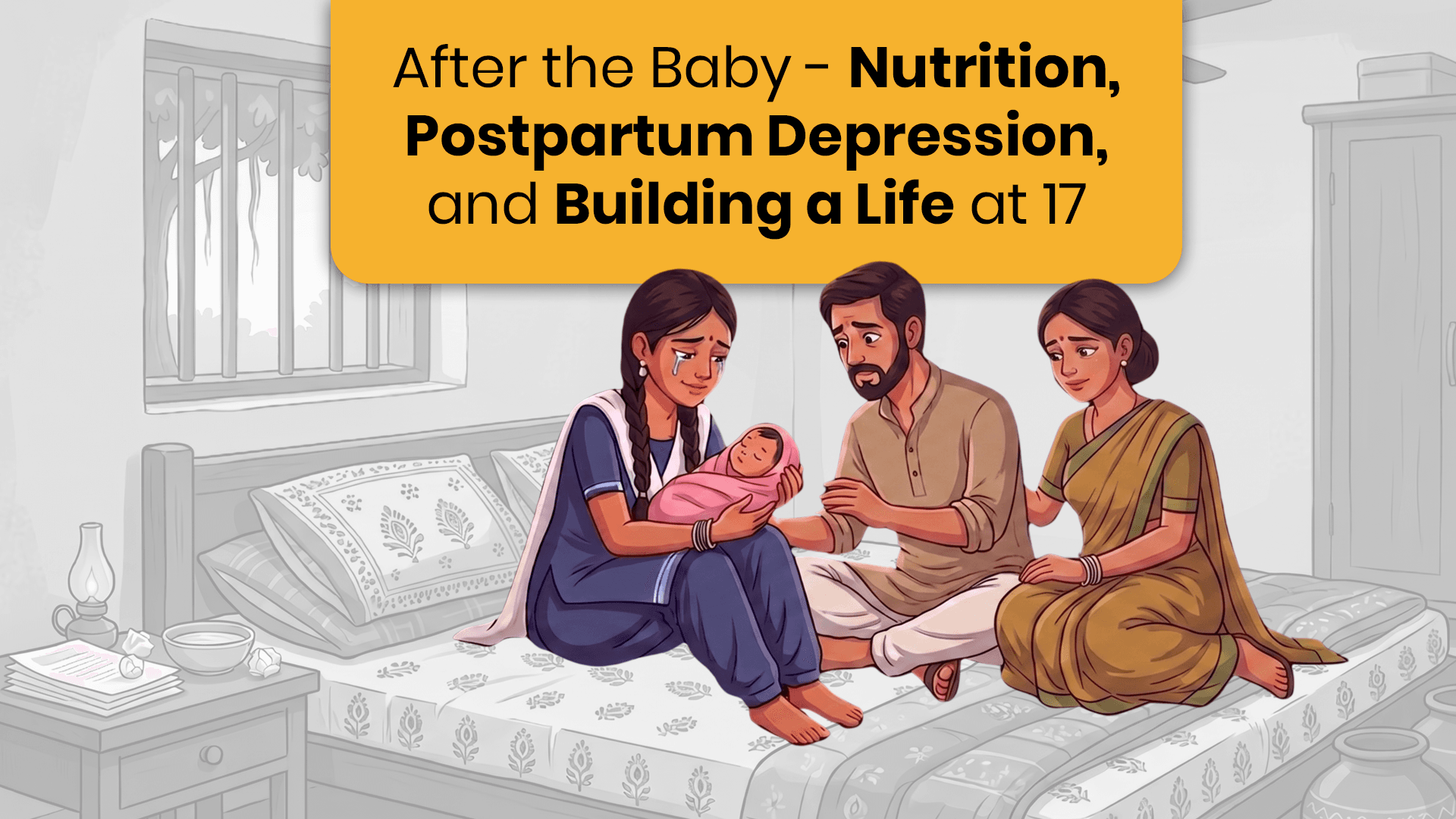
The baby has arrived. The drama has settled - or at least moved backstage. And now, quietly, a 17-year- old is trying to work out how to be a mother, care for her still-growing body, feed another human being, and somehow keep her life from narrowing permanently into this one chapter.
Most of the time, she is doing all of this without a manual, without support, and without anyone pausing to ask: "And how are YOU doing?"
Let us pause here: Everyone asks about the baby. Almost no one asks about the girl who became a mother overnight.
The body first. A teenage mother needs more nutrition than an adult mother because she is still growing. Her bones need calcium, and her blood needs iron badly - postnatal anaemia is common and dangerous if ignored. Breastfeeding demands additional calories and hydration. Yet in many Indian families, the new mother eats last, eats least, and eats whatever remains after the household has been served.
This is not tradition. This is neglect masquerading as custom.
Government schemes exist. The Pradhan Mantri Matru Vandana Yojana provides financial support for nutritional needs. Anganwadi centres offer supplementary nutrition and health check-ups. ASHA workers can visit at home. The Janani Suraksha Yojana supports institutional deliveries. These are not charity - they are entitlements. Yet awareness is miserably low, and navigating government paperwork at 17, while breastfeeding and without sleep, is a task nobody should face alone.
Zara sochiye: We have the schemes. We do not have the bridge between the scheme and the girl who needs it.
Now, the mind. Postnatal depression is not sadness. It is not anyi maa ka drama. It is a medical condition that affects roughly one in five new mothers globally - and in teenagers, the risk is even higher because the emotional infrastructure is simply not there yet. Symptoms include withdrawal from the baby, crying without an apparent reason, inability to sleep even when the baby is asleep, persistent feelings of worthlessness, and, in severe cases, thoughts of harming oneself.
In India, we rarely screen for this. We rarely even ask. When a young mother says she is not coping, she is told to toughen up, pray more, or remember that her mother managed just fine. Toughening up is not a treatment protocol.
Sochne wali baat: If she cannot bond with her baby, she is not failing as a mother. Her brain chemistry is struggling. That is a medical fact, not a moral judgement.
Education need not end. Open schooling through NIOS allows students to continue their studies from home. Some NGOs run bridge courses for young mothers re-entering the system. Vocational training can open doors even when formal schooling stalls. The key is ensuring someone tells her these options exist - because nobody volunteers this information.
A Word for Parents
Your daughter is now a mother. She is still your child. The temptation to say "I told you so" is real. Resist it. It serves your frustration, not her recovery. What helps: making sure she eats properly, sees a doctor regularly, sleeps when the baby does, and knows - truly knows - that her life has not ended. It has changed direction. Those are very different things.
You raised her. Now help her raise herself - again, from a different starting line.
Here is what stays: A 17-year-old who is supported can still become anything. A 17-year-old who is abandoned becomes a statistic. That choice rests with the family.
TSSF team is eager to hear from you - write to us at info@sunitisolomon.org or call us at 044-28363200.
#TeenMotherhood #YoungMothers #PostpartumCare #PostpartumDepression #MaternalHealth #AdolescentHealth #WomensHealthIndia #MentalHealthMatters #NutritionMatters #BreastfeedingSupport #NewMothers #SupportNotStigma #CareForMothers #PublicHealthIndia #RKSKIndia #AnganwadiServices #PMMVY #JananiSurakshaYojana #HealthcareAccess #ContinueEducation #NIOSIndia #EmpowerYoungMothers #FamilySupport #BreakTheStigma #SafeMotherhood #YouAreNotAlone #AwarenessMatters #SupportSystems #HealthyMothers #FutureMatters #TSSFBlogs