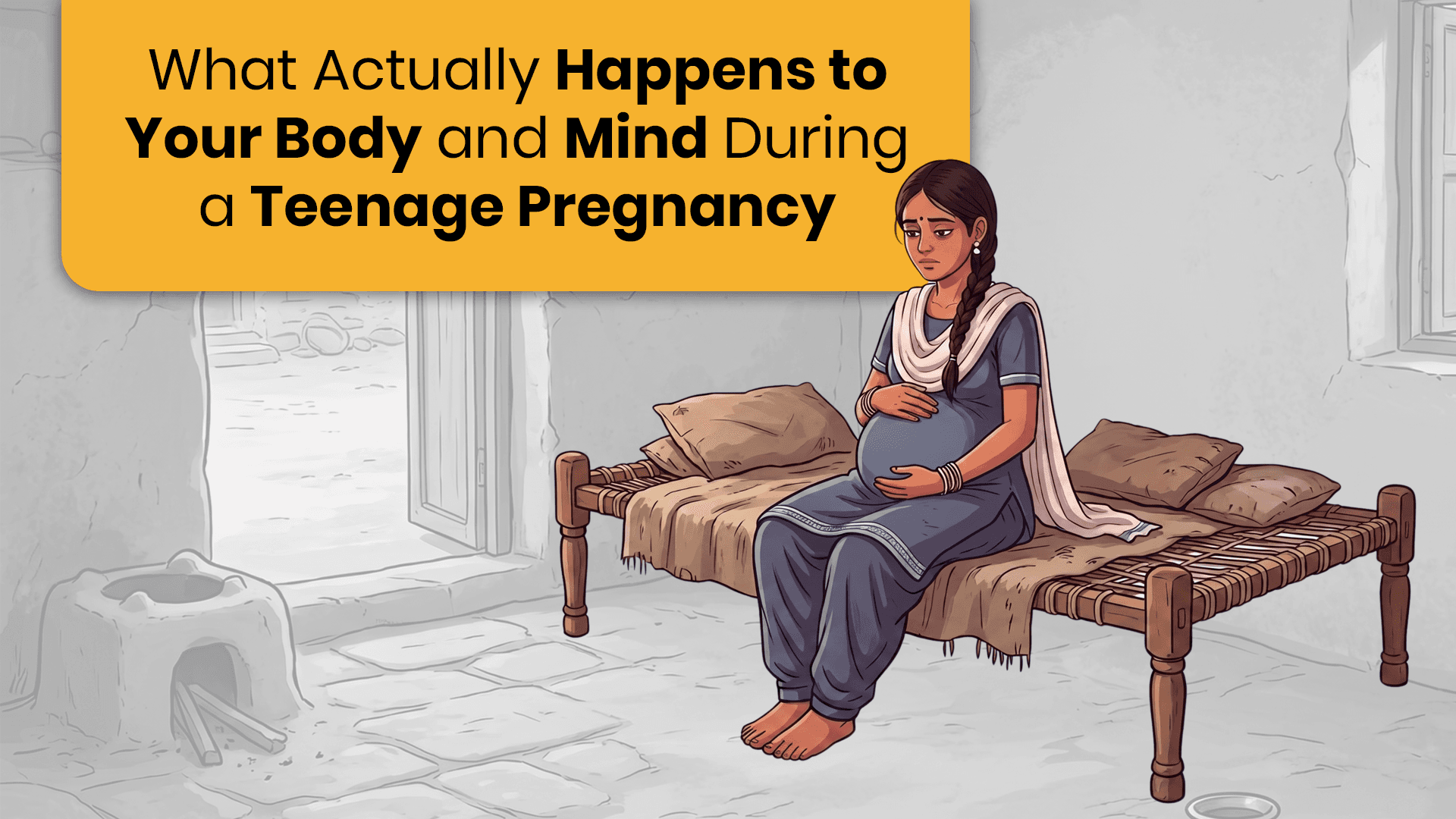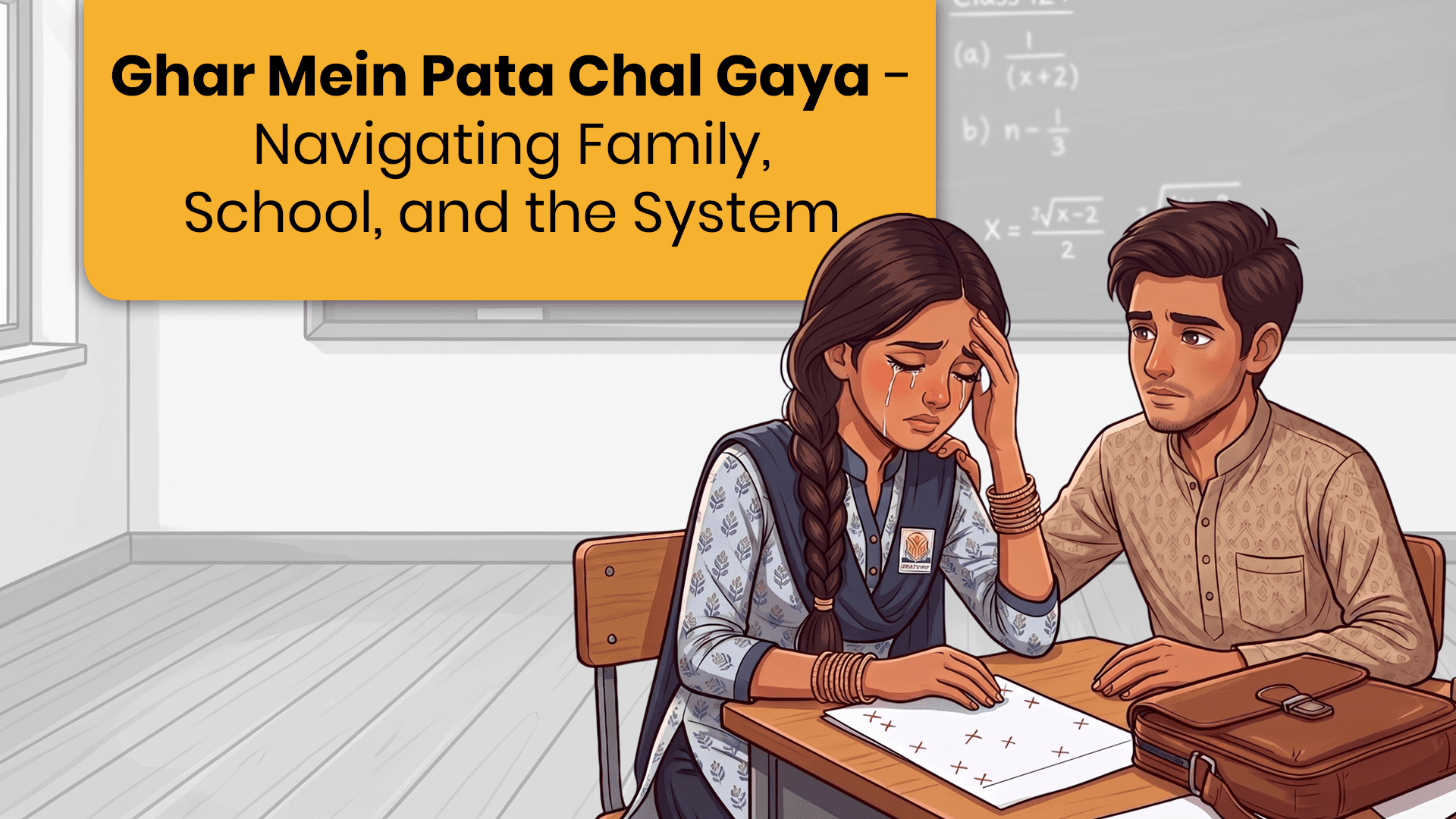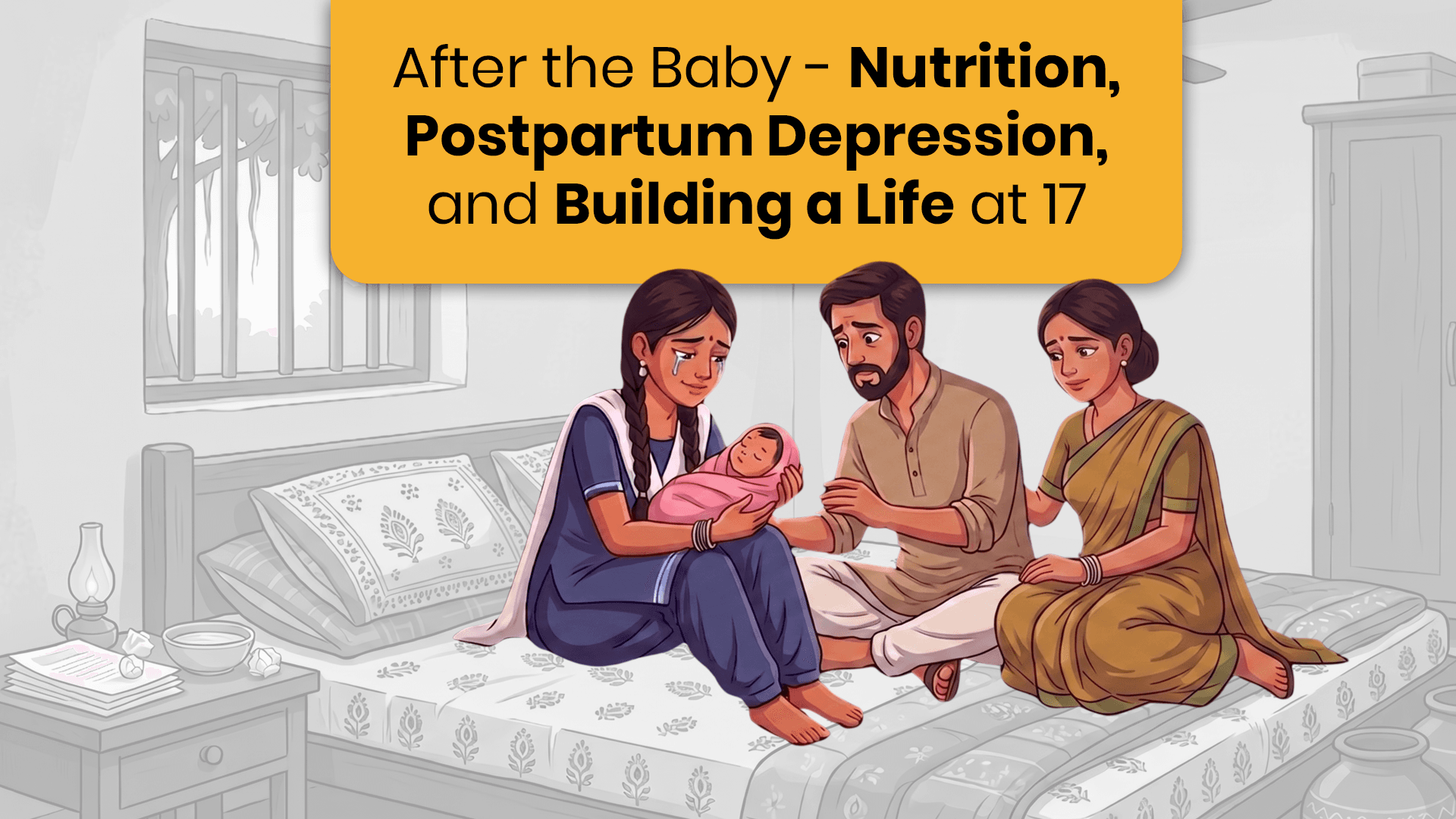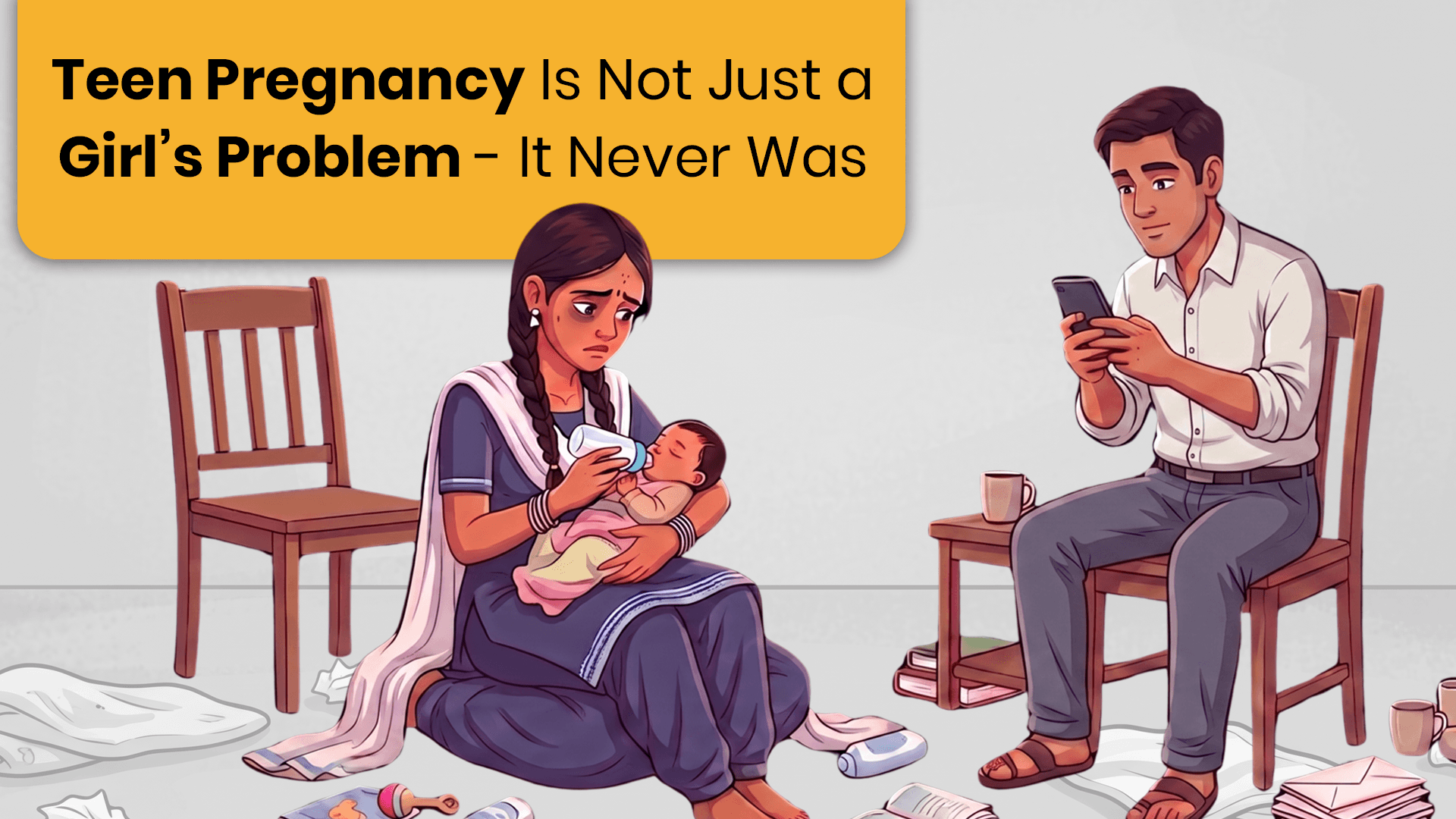
When a teenage girl gets pregnant in India, here is the standard drill. The girl is taken out of school. The girl is sent to a relative's house. The girl's future is discussed in whispers by adults who cannot bring themselves to look her in the eye. The girl becomes the story.
And the boy? Uska naam nahi lete. He goes to school the next day. His life goes on. Nobody calls a family meeting about his future. Nobody whispers about him at functions.
Sochne wali baat: If it takes two people to create a pregnancy, why does only one person's life collapse because of it?
This disappearing act is no accident. It is a system. When we frame teen pregnancy as a girl's mistake, we hand boys a free pass. The message is clear: this is not your problem. Walk away. Nobody will follow.
And the roots run deeper than any single incident. Our culture teaches boys a version of masculinity that separates pleasure from responsibility. Sex is a conquest. Pregnancy is her problem. Contraception? That is a girl's department. The entire architecture of prevention - whatever little there is - targets girls. Be careful. Cover yourself. Do not let anything happen. As if biology were a one-player game.
What are we teaching boys? That their role ends with the act itself. That fatherhood at 17 is invisible, optional, somebody else's headache. We are creating a generation of young men who do not connect their actions with what happens next.
Ek minute ruko: Would we accept this logic anywhere else - that the person who lit the match bears no responsibility for the fire?
Teen fathers do exist. Some are terrified. Some want to be involved, but their families tell them to stay away, as though distance could erase what happened. Some are genuinely irresponsible. But painting every teen father with the same brush is lazy thinking, and it lets the systems that failed both teenagers off the hook entirely.
What would change if schools included boys in conversations about pregnancy, not just girls? If families told their sons - as directly as they warn their daughters - that actions have consequences for another person? If consent, contraception, and emotional responsibility were treated as part of the male curriculum, not a female burden?
Everything. Everything would change. Not overnight, but the direction would shift.
Worth asking: If your son got a girl pregnant tomorrow, would he know what to do? Would he even realise it was his responsibility to find out?
A Word for Parents
If you have a son, this conversation is for you. Not the school. Not his friends. Not the internet. You. Tell him clearly - without drama, but without ambiguity - that his actions carry weight. That consent is not optional; it is non-negotiable. That contraception is his equal responsibility. That walking away from a situation he helped create does not make him clever. It makes him absent.
You do not need to terrify him. You need to inform him. There is a difference, and it matters.
Zara sochiye: The boy you do not talk to today becomes the man who does not know any better tomorrow. Parents, shall we ponder over this?
TSSF team is eager to hear from you - write to us at info@sunitisolomon.org or call us at 044-28363200.
#TeenPregnancy #SharedResponsibility #TeenFathers #BoysResponsibility #AdolescentHealth #GenderEquality #SexEducationIndia #ConsentMatters #SafeSexEducation #YouthAwareness #BreakTheStigma #EqualAccountability #ParentingBoys #ResponsibleMen #ReproductiveHealth #TeenHealthIndia #InformedYouth #HealthyRelationships #MaleResponsibility #EndTheDoubleStandard #PublicHealthIndia #TalkToYourKids #NoMoreSilence #EmpowerYoungPeople #LifeSkillsEducation #SocialChange #AwarenessMatters #RaiseBetterMen #InclusiveConversations #ChangeTheNarrative #TSSFBlogs