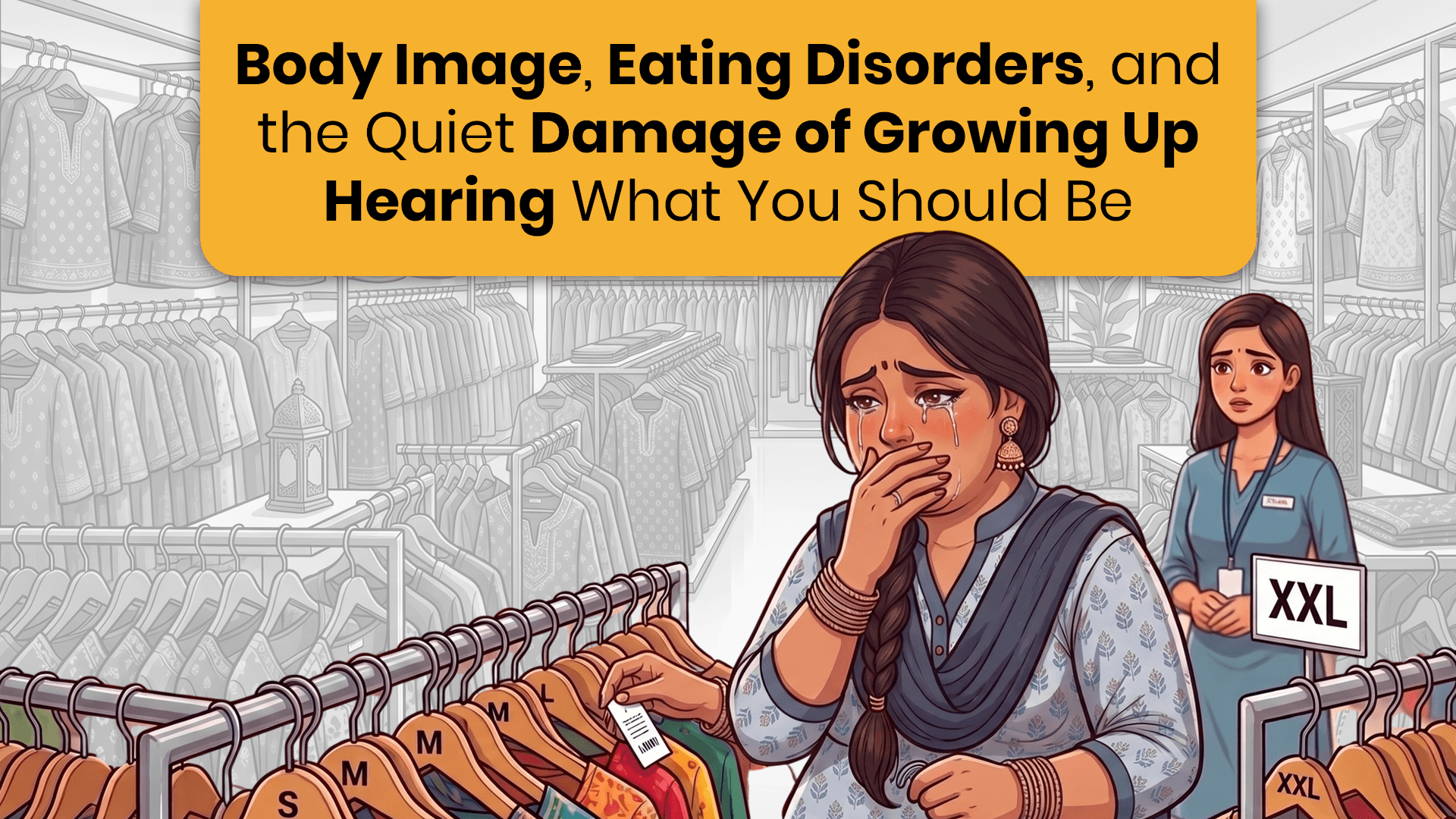
From childhood in India, your body is public property. Aunties comment on your weight at weddings. Relatives give you fairness creams for your birthday. Your grandmother pinches your waist and announces, "Thoda kam khao, nahi toh shaadi mein dikkat hogi." You are eleven and already learning that your body is wrong.
And so the checklist begins. Fair skin. Slim figure. Straight hair. The right height. Flat stomach. If you do not match it, you are told - sometimes bluntly, sometimes with affection - that you need to improve. As though you are a house needing renovation, not a human being who is already complete.
Sochne wali baat: The fairness cream industry alone is worth thousands of crores. That is not skincare. It is monetised self-hatred.
By the time Indian girls reach their teens, many have already developed an adversarial relationship with food. Diets that start too early and go too far. Skipping meals. Exercising obsessively. Purging. Using laxatives. Counting calories with the intensity of an accountant during audit season. These are not phases. These are eating disorders. And they are flourishing in India while we pretend they happen only in the West.
The diet culture industry makes it worse. Keto challenges on Instagram. Intermittent fasting promoted by influencers who are not nutritionists. Herbalife-type MLMs selling meal replacements to college students. Detox teas that promise flat bellies while causing diarrhoea. The business model is simple: make her feel inadequate, then sell her the cure.
Ek minute ruko: When a 15-year-old is counting macros instead of doing her homework, that is not health consciousness. It is a red flag waving in your face.
Social media adds industrial-grade fuel to this fire. Filters that reshape your face. Apps that slim your waist in photographs. A relentless feed of bodies that do not exist in real life, presented as normal. The gap between who you see in the mirror and who you see on your screen becomes a chasm your self-worth cannot cross.
The damage is not always visible. A girl who eats normally at the family table but then disappears into the bathroom. A college student who runs two hours a day and calls it discipline. A young woman who lets a weighing scale decide her mood every morning. These are not quirks. These are symptoms.
Eating disorders are mental health conditions. They are linked to anxiety, depression, and, in severe cases, organ damage and self-harm. They require professional treatment, not advice such as "just eat normally" or "stop being dramatic."
Think about this: If this seems like vanity to you, you are seeing the surface and missing the crisis beneath.
A Word for Parents
Every comment about your child's body is stored somewhere they will never delete it. The dinner-table remark. The comparison with a cousin. The sigh when she reaches for dessert. These accumulate silently. If her eating habits have changed - eating less, being more secretive, suddenly becoming obsessed with exercise - do not dismiss it. And please, do not tell her she is overreacting. She is under-treating.
Here is what stays: The girl who hates her body did not arrive at that hatred alone. Someone built the road. Make sure it was not you.
TSSF team is eager to hear from you - write to us at info@sunitisolomon.org or call us at 044-28363200.
#BodyImage #EatingDisordersAwareness #MentalHealthIndia #BodyShaming #DietCulture #SelfEsteem #WomensMentalHealth #TeenMentalHealth #IndianWomen #BodyPositivity #DisorderedEating #AnxietyAwareness #DepressionAwareness #SocialMediaImpact #BeautyStandards #FairnessCreams #ToxicBeautyStandards #HealthAtEverySize #FoodRelationship #SelfWorth #MentalHealthMatters #HiddenStruggles #CulturalPressure #IndianSociety #YouthMentalHealth #WellnessMyths #InfluencerCulture #DigitalDistortion #NormalizeSeekingHelp #MentalHealthSupport #TSSFBlogs