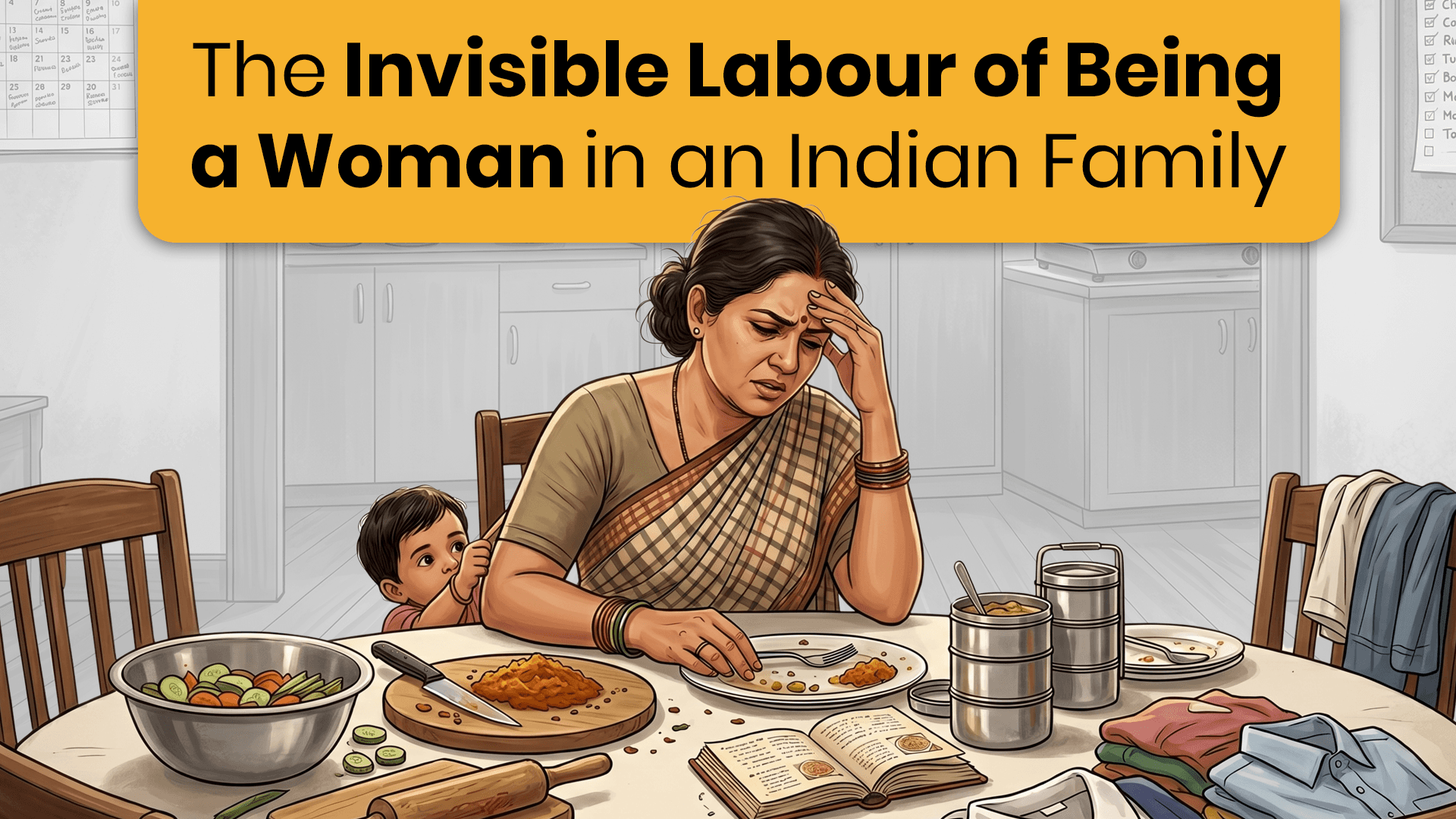
She remembers everyone's doctor appointments. She knows when the school fees are due, which sabzi is running low, and that her mother-in-law's BP medicine needs a refill by Thursday. She manages the festival shopping, the relatives' birthdays, the maid's moods, and the tiffin rotation - while somehow also holding down a job, attending kitty parties she does not enjoy, and looking as if none of it requires effort.
Because the moment it looks like effort, someone will helpfully suggest she "manages her time better".
Sochne wali baat: She is running the entire operations department for the family. Her designation is bahu. Her salary is zero. Her performance review takes place at every family gathering.
This is the mental load. It is not about housework. It is about who is thinking about the housework. Who is tracking, planning, anticipating, and remembering. A husband can be asked to buy vegetables and will bring back exactly what the list says. But she is the one who checked the fridge, planned meals for the week, wrote the list, and reminded him twice. The task gets shared. The thinking behind it never does.
In Indian families, the load is amplified by the daughter-in-law dynamic. Constant observation by older family members. Comparisons with other bahus, real or imagined. The expectation to be grateful, cheerful, and endlessly flexible - while navigating a household whose rules she did not write and cannot challenge without being labelled "difficult".
Ek minute ruko: If a man did half of what women do at home every day, we would call him exceptional. When she does it all, we call it "her job." The double standard is not subtle.
Over the years, this invisible work takes a toll nobody discusses. Burnout. Resentment. The slow, quiet feeling of drowning in a life that looks perfectly fine from the outside. Women often do not recognise it because they were raised to believe this is simply what women do. It is what women have always done. So it must be normal.
Normal and healthy are not the same thing.
What does redistribution actually look like? It looks like a husband who does not "help" with housework but recognises it as his responsibility too. It looks like in-laws who understand that their bahu is a human being, not a role. It looks like children who are taught from age five that chores belong to everyone. It looks like a family that does not wait for the woman to collapse before asking whether she needs a break.
Think about this: She is not seeking applause. She is seeking a partner. There is a difference, and it matters more than most people realise.
A Word for Parents
If your daughter-in-law seems tired, withdrawn, or slowly retreating into herself, she might be carrying more than any one person should. Before suggesting she should "manage better," ask a different question: has anyone in this household ever asked her what she needs? Not as a formality. As a genuine question, followed by genuine listening.
Zara sochiye: The answer might surprise you, or it might not. Either way, it is long overdue.
TSSF team is eager to hear from you - write to us at info@sunitisolomon.org or call us at 044-28363200.
#InvisibleLabour #MentalLoad #EmotionalLabour #IndianWomen #WomenInIndia #GenderRoles #PatriarchyInIndia #UnpaidCareWork #DomesticLabour #CaregivingBurden #WomenAndMentalHealth #BurnoutInWomen #HouseholdInequality #ShareTheLoad #EqualPartnership #ModernIndianWomen #BahuLife #IndianFamilies #ToxicNorms #GenderEqualityIndia #RecognizeTheUnseen #WomenDeserveBetter #StopNormalizingBurnout #RedistributeCare #EverydaySexism #MindTheMentalLoad #RespectWomenAtHome #ChangeStartsAtHome #ListenToWomen #RealTalkGender #TSSFBlogs