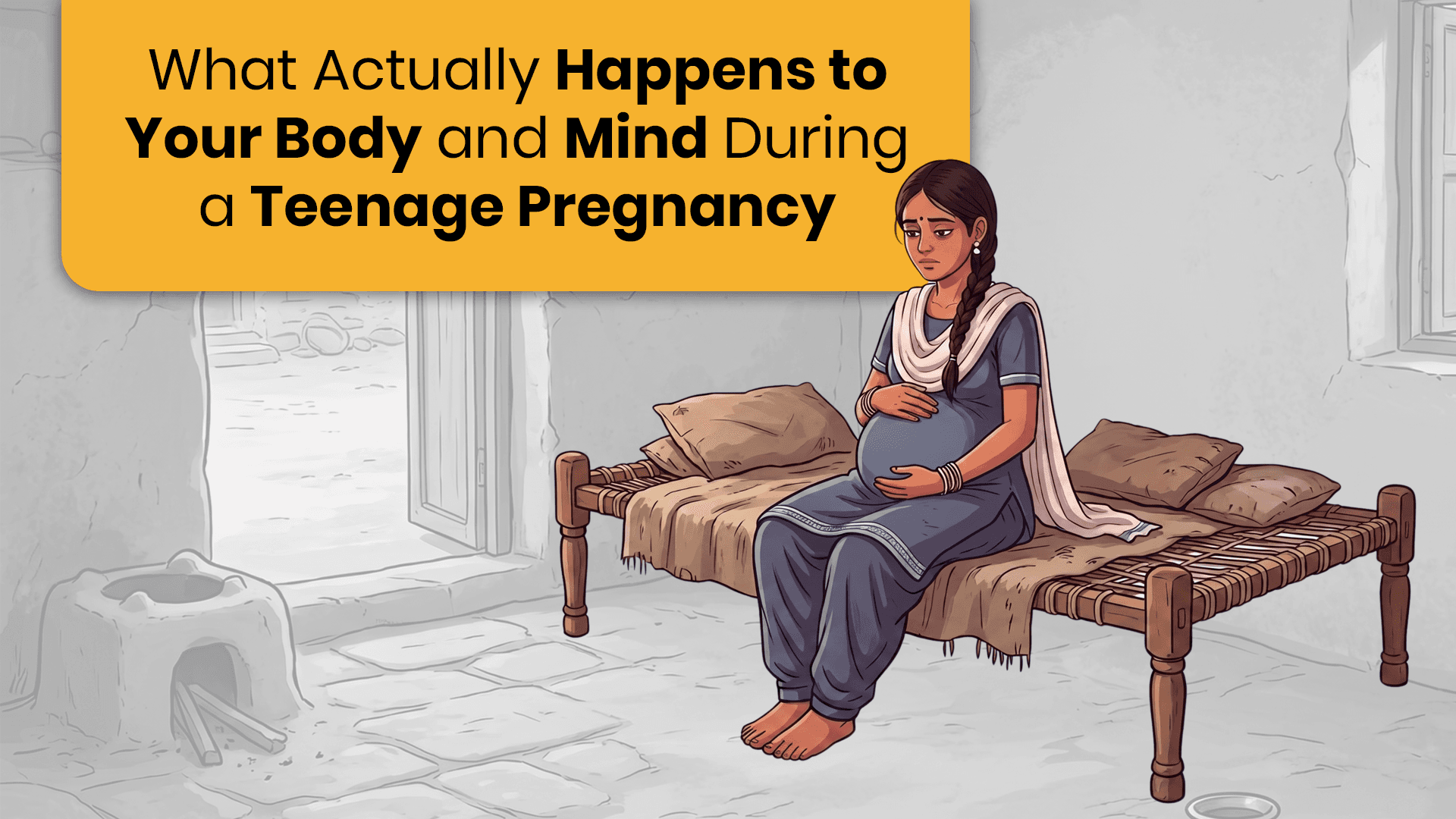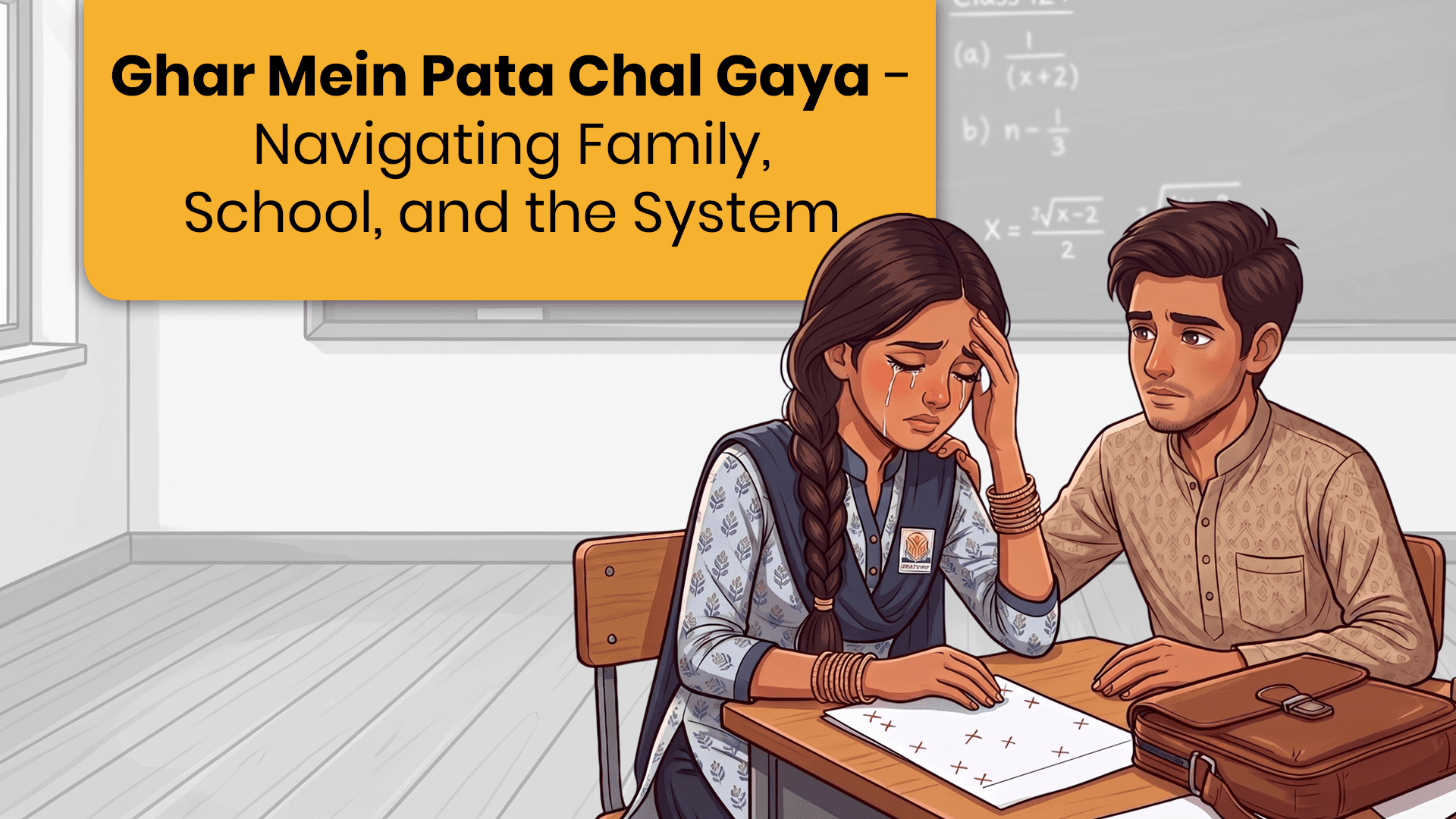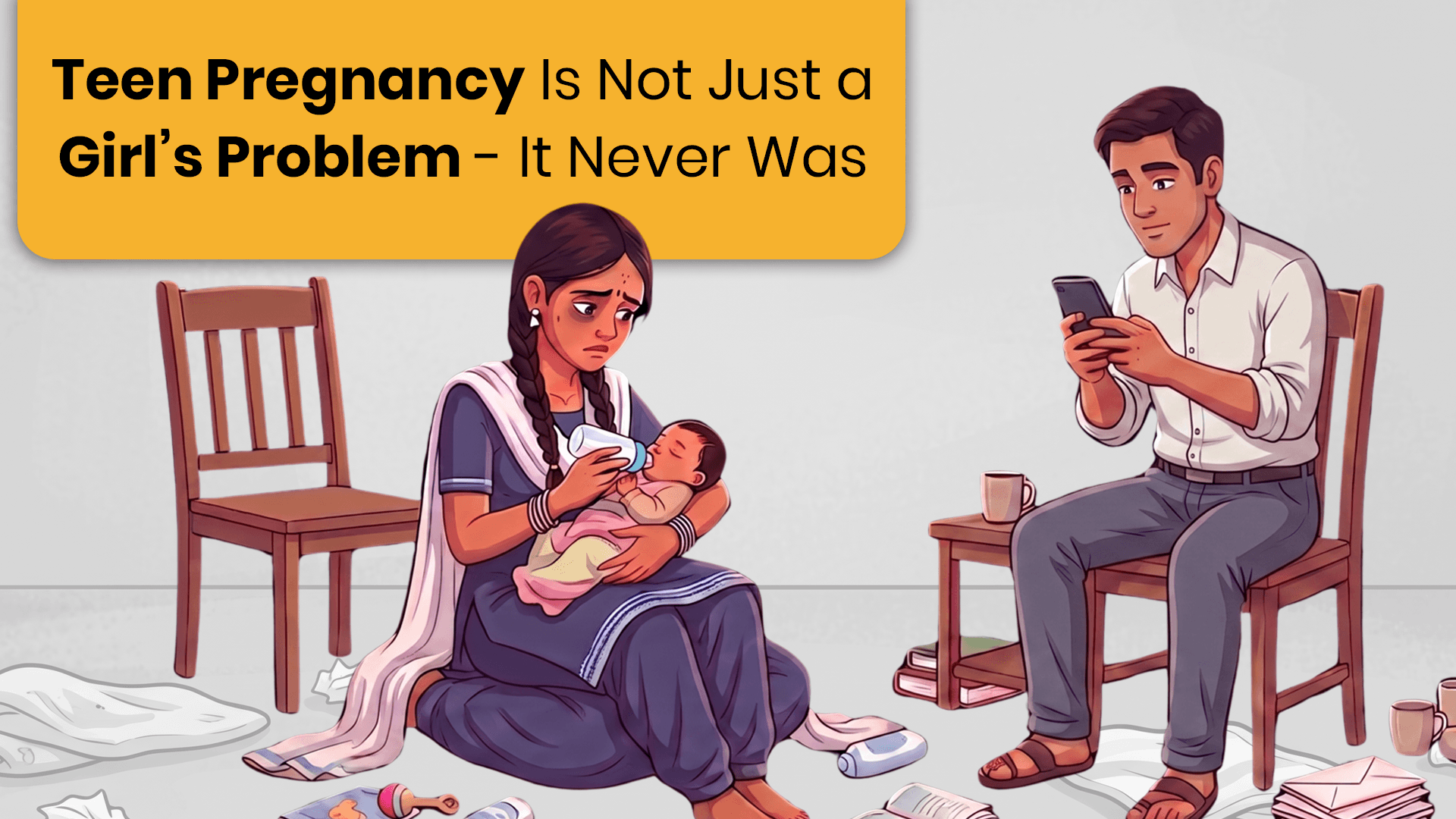
When we talk about teen pregnancy, the conversation usually starts and ends with the girl. What did she do? Why was she not careful? Who is the boy? These are the questions people reach for, but they are also the wrong ones.
Teen pregnancy does not begin with a mistake. It begins with a system. A very old, very stubborn system.
Sochne wali baat: Blaming a 15-year-old for a pregnancy is like blaming a plant for dying in soil that no one watered.
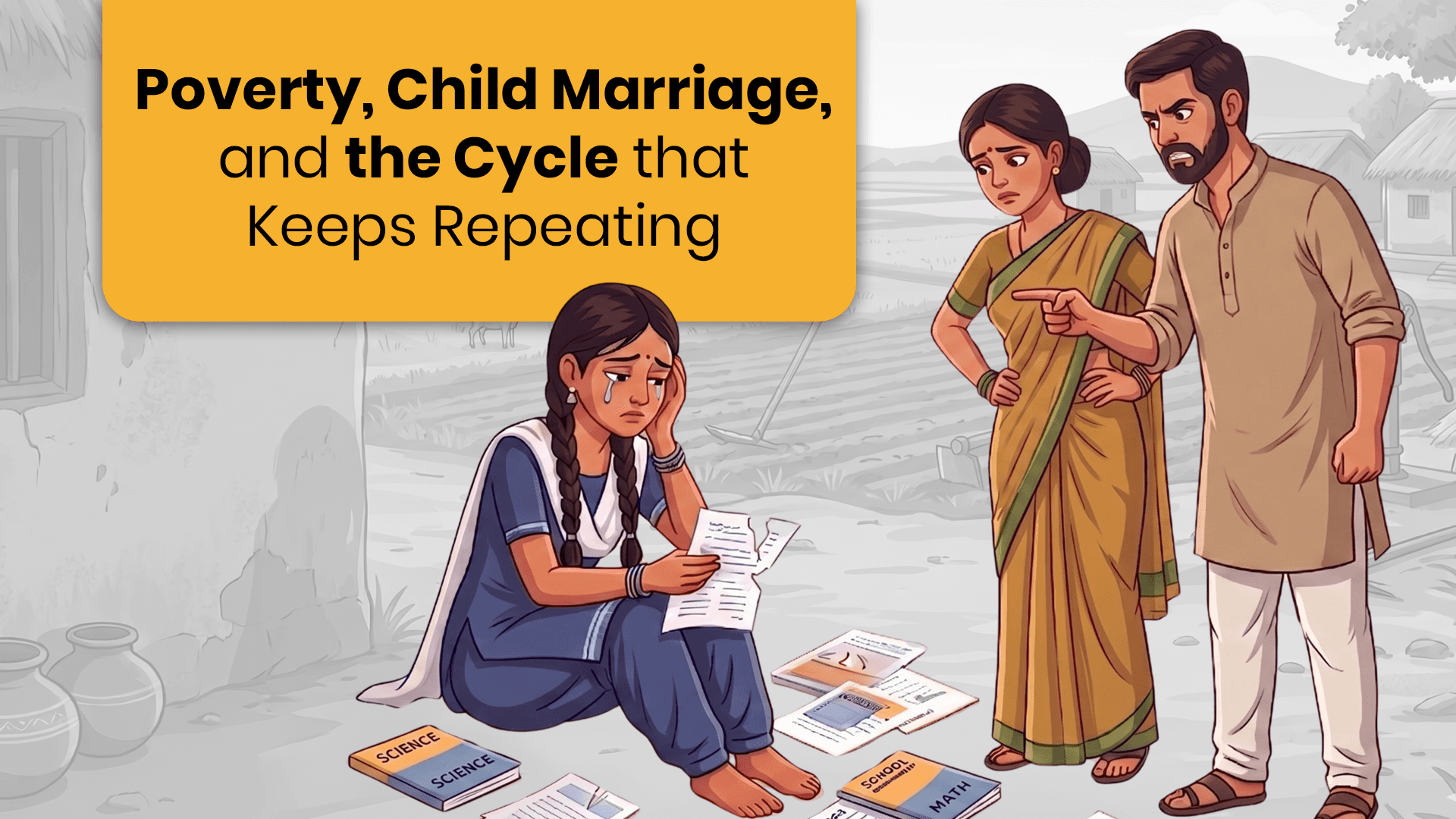
In India, child marriage remains widespread despite being illegal for decades. NFHS-5 data shows that roughly 23 per cent of women aged 20-24 were married before turning 18. In states such as Bihar, Jharkhand, and West Bengal, the figures are even higher. When a girl is married at 15 or 16, pregnancy is not an accident - it is an expectation. The family expects it. The husband's family demands it. The girl has no say, no information, and often no understanding of what is happening to her body.
That is not a teenage pregnancy problem. That is a child rights catastrophe, hiding in plain sight.
Let us be clear: A married child remains a child. Marriage does not make pregnancy safe, appropriate, or any less of a crisis for a body that is not ready.
Poverty tightens every knot. A girl from a low-income family is less likely to stay in school, less likely to access contraception, less likely to know her rights, and less likely to have a doctor she can speak to without fear. When pregnancy occurs, the cycle tightens further. She drops out. Her earning potential shrinks. Her children are born into the same conditions. And it repeats.
Generation after generation. The same story in a different house. Different village, same ending.
But here is what the cycle-of-poverty narrative misses: there are girls who break through. The girl in Rajasthan whose teacher refused to let her drop out. The girl in Odisha whose ASHA worker connected her to a government scheme. The girl in Tamil Nadu whose mother said, "Tu padhai mat chhod." These stories exist. They are not common enough, and that is precisely the point - they should not be exceptional. They should be ordinary.
Think about this: When one girl breaks the cycle, we call her inspiring. When a thousand do, we call it policy. What are we waiting for?
We have slogans in India - Beti Bachao, Beti Padhao. Good words. But slogans do not feed a 16-year-old mother in a village where the nearest hospital is half a day away. Policy needs to reach the ground. Healthcare, education, and economic support for families need to go where the problem is, not where the camera is.
A Word for Parents
If you are reading this and thinking, "This does not apply to my family" - perhaps it does not. But perhaps it applies to the girl next door who stopped attending school last month. The young bride in your neighbourhood. The domestic help's daughter. The question is not always about your child. Sometimes it is about what you are willing to notice and what you are unwilling to stay quiet about.
Ruk ke socho: The cycle does not break only within families. Sometimes it breaks because someone outside cared enough to speak up.
TSSF team is eager to hear from you - write to us at info@sunitisolomon.org or call us at 044-28363200.
#TeenPregnancyIndia #ChildMarriage #EndChildMarriage #PovertyCycle #SocialDeterminants #PublicHealthIndia #AdolescentHealth #GirlsEducation #RightToEducation #BreakTheCycle #YouthRights #ReproductiveHealth #GenderInequality #StopChildMarriage #BetiBachaoBetiPadhao #EducationForGirls #HealthcareAccess #RuralIndia #SocialJusticeIndia #EmpowerGirls #EndTheStigma #StructuralInequality #PolicyMatters #AwarenessMatters #SupportCommunities #ChangeTheSystem #VoiceForGirls #InclusiveDevelopment #ActForChange #FutureOfIndia #TSSFBlogs