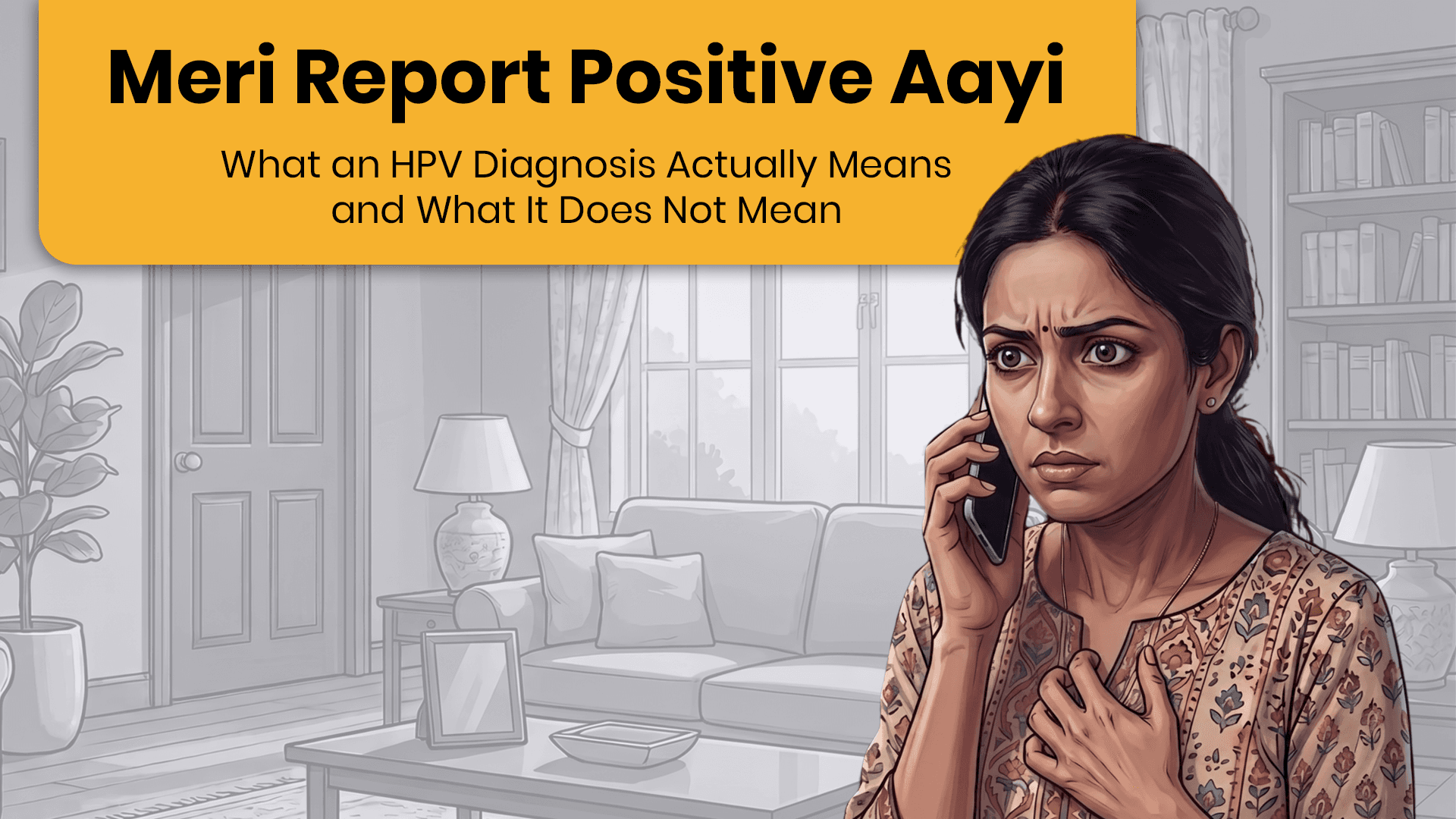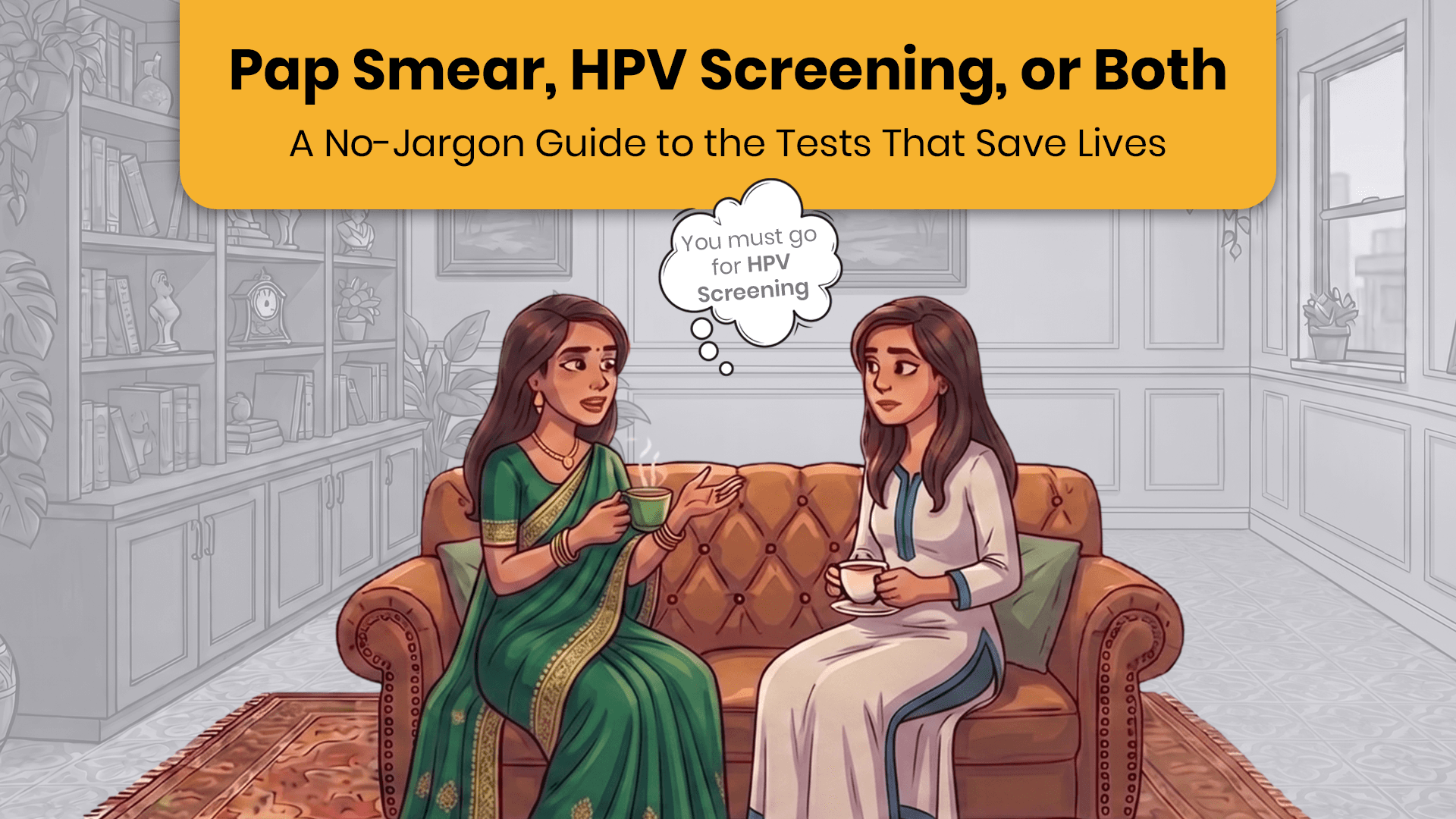
Ask ten people around you whether they have heard of HPV. Eight will say no. One will vaguely recall reading something online. And one will confuse it with HIV, which is a completely different virus. That is where we stand as a country in terms of awareness of one of the most common infections in the world.
HPV - Human Papillomavirus - is not a single virus. It is a family of more than 200 related viruses. Most of them do nothing. Your body fights them off quietly, like a minor cold, and you never know they were there. Some cause genital warts. And about 14 strains - called high-risk types - can, over years of persistent infection, lead to cancers. Cervical cancer is the best-known link, but HPV can also cause cancers of the throat, mouth, anus, and penis.
Ruk ke socho: That last line means HPV is everybody's business - not just women's. Yet in India, most men have never even heard of the term.
Here is what makes HPV tricky: it is almost always invisible. No fever. No rash. No pain. No warning signs. A person can carry it for years without any symptoms. It spreads through skin-to-skin contact during sexual activity - not just intercourse. Oral sex, genital contact, and even intimate touching can transmit it. Condoms reduce the risk but do not eliminate it entirely because HPV lives on skin that condoms do not cover.
The notion that only "certain types" of people get HPV is medically incorrect and socially harmful. Sexually active people of any background, gender, orientation, or marital status can contract it. Studies estimate that nearly 80 per cent of sexually active people will acquire at least one HPV infection in their lifetime.
Sochne wali baat: Eighty per cent. This is not rare. This is not exotic. This is almost universal - yet almost universally ignored in India.
The good news is substantial. A vaccine exists and is effective. Screening tests can detect problems early. For the vast majority of people, HPV clears on its own within two years without causing any harm. The bad news? In India, awareness is so low that most people do not know to get vaccinated, do not know that screening is available, and only discover HPV when it has already progressed to something far more serious.
This is not a moral issue. It is not about character, lifestyle, or karma. It is a health issue. The virus does not check your values before infecting you. Our response should be equally practical.
Think about this: We do not blame people for catching a cold. Why do we shame people for a virus that is even more common?
A Word for Parents
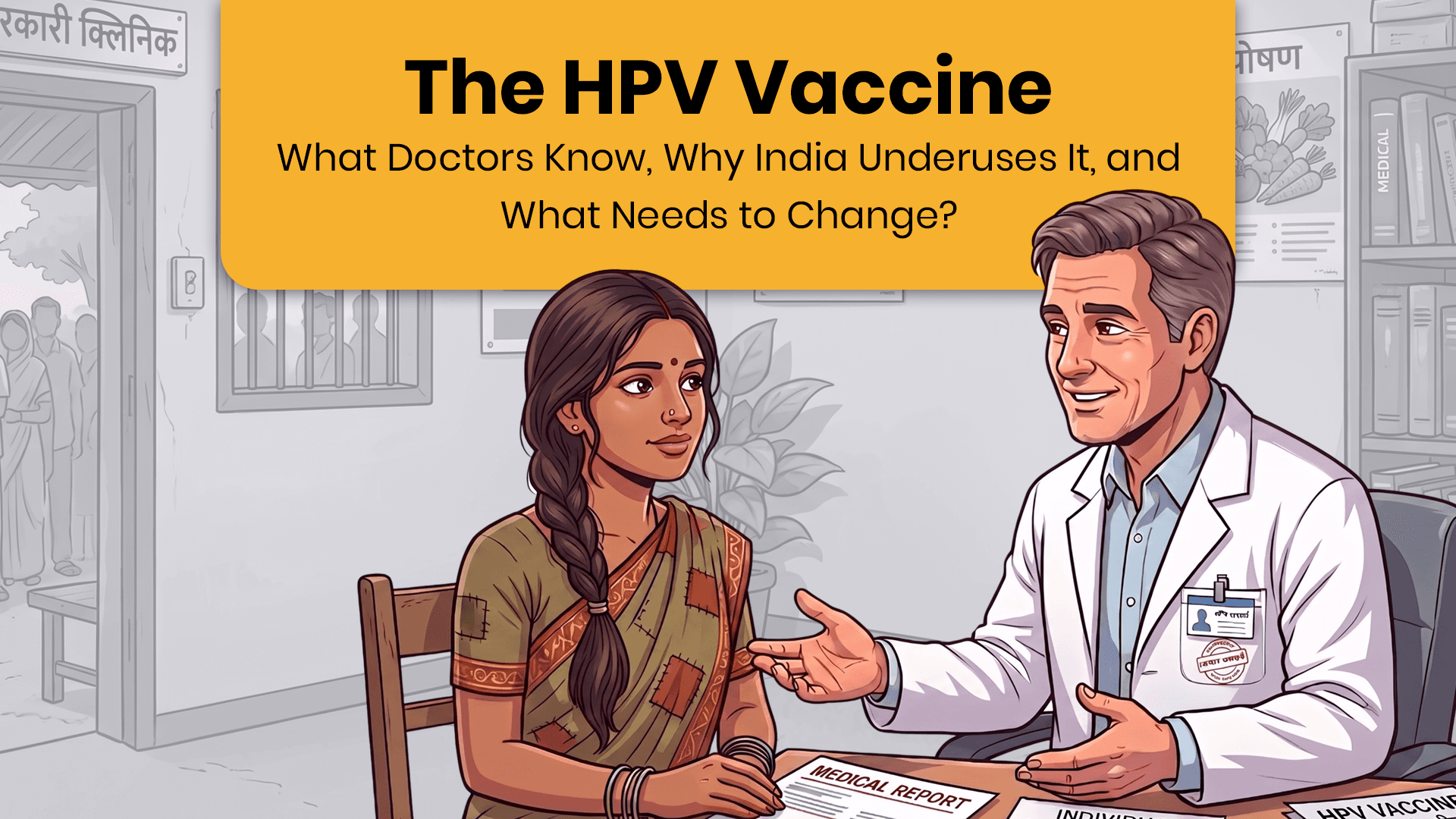
The HPV vaccine is recommended for boys and girls aged 9 to 14. That may sound young, but it is intentional - the vaccine works best before any exposure to the virus. The HPV vaccine is recommended for girls aged 9 to 14 as the primary target group. The CDC and several countries also recommend it for boys in the same age group, and WHO supports vaccinating boys where resources allow. Vaccinating your child is not about assuming they are sexually active. It is about protecting them from a cancer that is entirely preventable. You vaccinate against polio without thinking twice. You vaccinate against measles without moral debate.
Zara sochiye: This deserves the same matter-of-fact response. Vaccine lagao. Cancer roko. Bas.
TSSF team is eager to hear from you - write to us at info@sunitisolomon.org or call us at 044-28363200.
#HPVAwareness #HPVIndia #CervicalCancerPrevention #KnowHPV #PublicHealthIndia #HealthAwareness #CancerPrevention #HPVVaccine #VaccinationMatters #WomensHealthIndia #MensHealthIndia #SexualHealthEducation #PreventiveHealthcare #EarlyDetection #ScreeningSavesLives #HealthLiteracy #BreakTheStigma #InfectionAwareness #CommonNotRare #StayInformed #MedicalAwareness #HealthcareIndia #ProtectYourHealth #StopTheStigma #AwarenessMatters #HealthyIndia #DiseasePrevention #TalkAboutHealth #MythVsFact #InformedChoices #TSSFBlogs