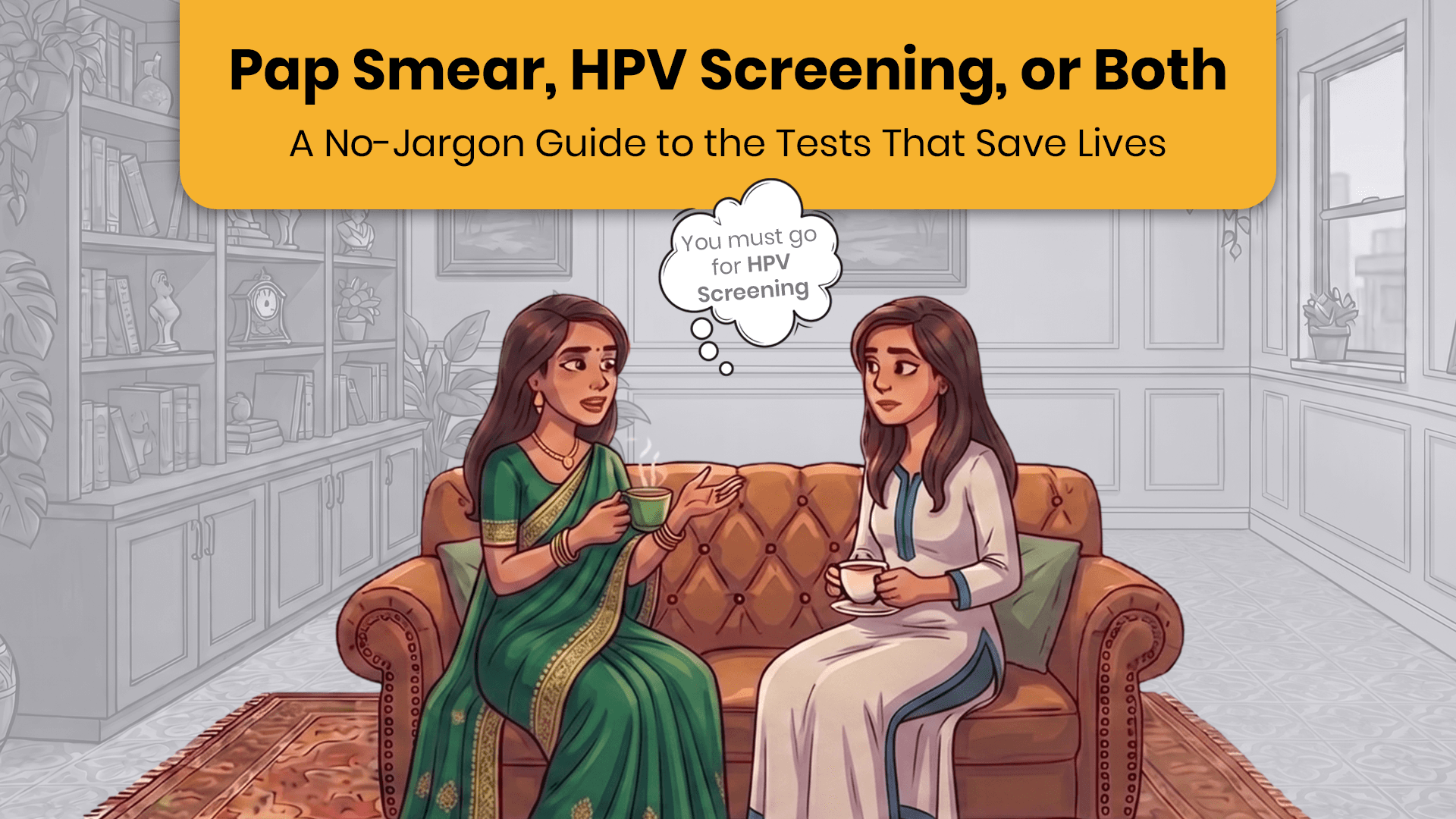
Most Indian women have never had a Pap smear. Not because they do not need one. Not because they cannot afford one. But because nobody - not their mother, not their doctor, sometimes not even their gynaecologist - has told them it exists and that it could save their life.
That sentence should make you angry. If it does, good. Keep reading.
Sochne wali baat: A five-minute test can detect cervical cancer ten years before it develops. And most women in India have never been offered it.
A Pap smear, also called a Pap test, collects cells from the cervix and examines them under a microscope. It does not test for HPV directly. It checks whether HPV or other factors have caused cells to change in ways that might, over time, become problematic. Think of it as an early warning system - it catches trouble before trouble catches you.
An HPV test checks specifically for the virus itself, particularly high-risk strains such as HPV 16 and 18. It does not look at cell changes. It looks for the source of potential change.
Simple way to remember: the HPV test asks, "Is the fire-starter here?" The Pap smear asks, "Has any fire started?" Together, they give the fullest picture.
Now, for the part nobody talks about - what does the test actually feel like? A Pap smear takes about three to five minutes. A speculum is gently inserted to open the vaginal canal. A small brush collects cells from the cervix. It can feel mildly uncomfortable - cold and a bit of pressure - but it is not painful for most women. It is less uncomfortable than a bad period cramp. And it is over before your chai gets cold.
Zara sochiye: Five minutes of mild discomfort versus years of preventable disease. That is not a difficult trade-off.
In resource-poor settings where labs are distant, a simpler method called VIA (Visual Inspection with Acetic Acid) is available. A health worker applies a vinegar solution to the cervix and looks for colour changes. It is less precise but far better than nothing, and it can be performed at a primary health centre without sending samples to a laboratory.
Current guidelines recommend screening for women aged 25 to 65 at regular intervals. If you are over 30 and have never been screened, start now. For pregnant women, HPV testing is safe during pregnancy. The virus does not typically affect the baby, but your doctor should be aware for monitoring.
Think about this: Screening is not about being sick. It is about staying ahead of illness. There is a difference - and it matters.
A Word for Parents
If you have a daughter in her twenties or older, bring up cervical screening in your next conversation. Not with alarm, but with the same matter-of-fact tone you would use for a dental check-up. And if you are a mother who has never been screened yourself - go first. Lead by example. Woh dekhegi, seekhegi.
Let us be honest: The best health lesson you can teach your daughter is not a lecture. It is an appointment you kept for yourself.
TSSF team is eager to hear from you - write to us at info@sunitisolomon.org or call us at 044-28363200.
#PapSmear #HPVScreening #CervicalScreening #CervicalCancerPrevention #WomensHealthIndia #PreventiveHealthcare #EarlyDetection #ScreeningSavesLives #HealthAwareness #HPVAwareness #KnowYourBody #RoutineCheckup #HealthEducation #MedicalAwareness #PublicHealthIndia #TakeChargeOfYourHealth #DoctorVisit #StayAhead #CancerPrevention #WomensWellbeing #HealthLiteracy #NoMoreTaboos #BreakTheStigma #RegularScreening #HealthyIndia #InformedChoices #SelfCareMatters #DetectEarly #ActNowIndia #CareForYourself #TSSFBlogs