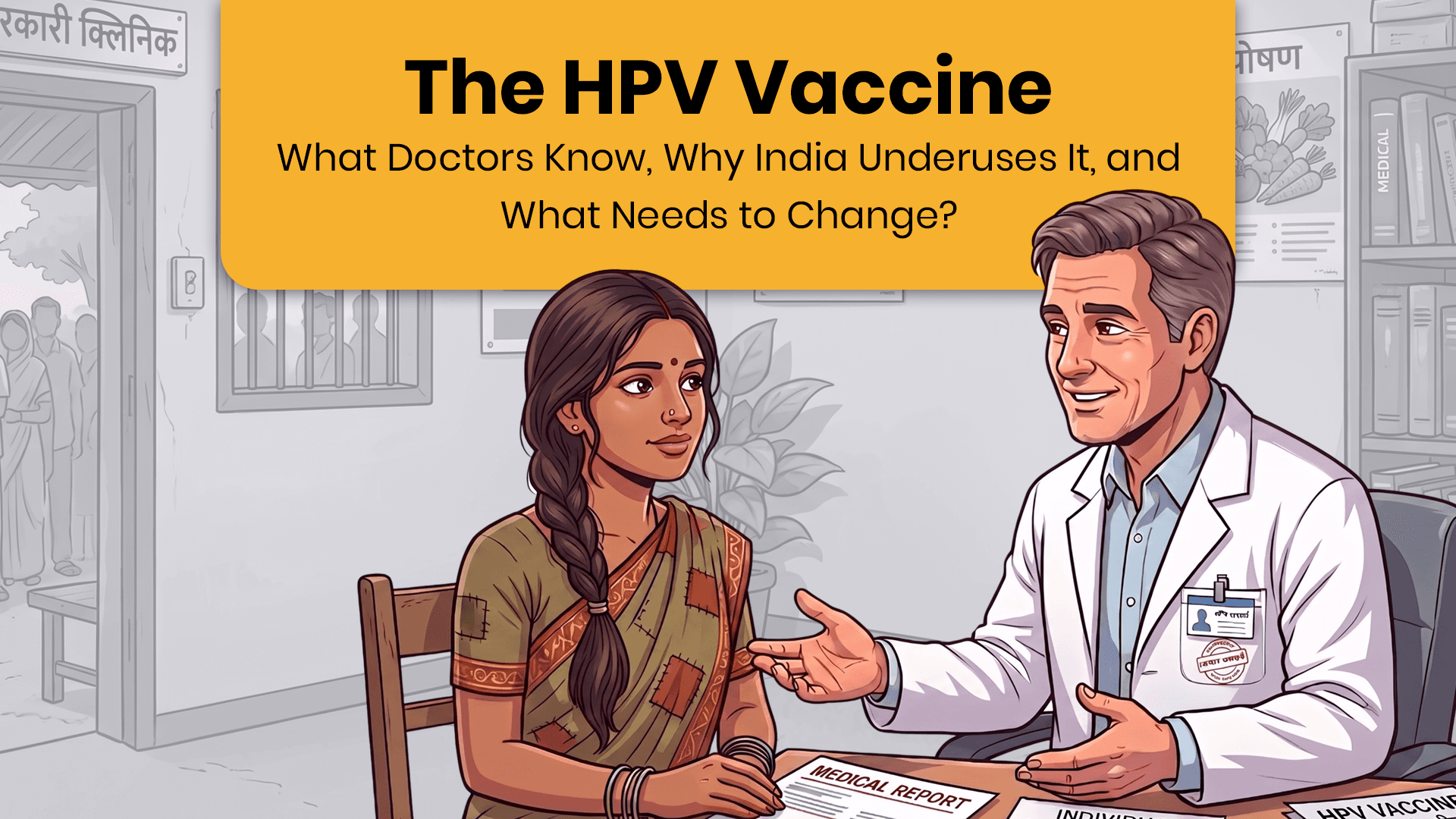
India manufactures vaccines for half the world. We eradicated polio. We run one of the largest immunisation programmes on the planet. Yet when it comes to the HPV vaccine - which prevents cervical cancer, the second most common cancer among Indian women - uptake is embarrassingly low.
Why? Because conversations about it are either absent or absurd.
Sochne wali baat: We trust vaccines enough to export them globally, but when it comes to protecting our own daughters from cancer, we hesitate. Where is the logic in that?
The facts deserve airtime. The HPV vaccine has been used worldwide since 2006. More than 120 countries include it in their national immunisation schedules. Safety data from hundreds of millions of doses administered have been reviewed by the WHO, the CDC, and every major health authority. In 2022, India's Serum Institute launched Cervavac, a domestically manufactured quadrivalent HPV vaccine, reducing the cost from thousands to a few hundred rupees per dose.
The government announced plans to include HPV vaccination in the Universal Immunisation Programme. That is progress - slow and overdue, but progress nonetheless.
So what is holding families back? A cocktail of misinformation, cultural discomfort, and plain silence. Some families believe the vaccine encourages sexual activity among young girls. It does not - any more than a seatbelt encourages reckless driving. The vaccine does not know what your daughter does or does not do. It protects her cells from a virus. That is all.
Zara sochiye: We do not assume a tetanus shot encourages children to play with rusty nails. Why does this vaccine receive different treatment?
Some families believe their daughter does not need it because she is not sexually active. The vaccine works best before any exposure, which is why it is recommended for 9-to-14-year-olds. Waiting until she is "older" or "needs it" defeats the purpose entirely. Others have simply never heard of it because their doctor never mentioned it - and that is a failure of the healthcare system, not the family.
Cervical cancer kills more than 77,000 Indian women every year. Most of these deaths -not some - are preventable with a vaccine that is available, affordable, and proven. Every year of delay costs lives that mathematics cannot recover.
Think about this: That is somebody's mother. Somebody's sister. Somebody's daughter. That was somebody who could have been vaccinated at 12 and lived to 80.
A Word for Parents
Your hesitation likely comes from a caring place. You want to be sure. That is fair. Here is a suggestion: talk to your paediatrician or gynaecologist. Not your WhatsApp group. Not your neighbour's aunty. A doctor. Ask about the evidence, the side effects (mild, short-lived, well documented), the schedule (two doses for under-15s), and the cost. Make your decision based on facts, not forwarded messages.
The vaccine costs a few hundred rupees. Cervical cancer treatment costs lakhs, if you survive it. That is not a scare tactic. That is arithmetic.
Ruk ke socho: In this case, doing nothing is the riskier and less loving choice.
TSSF team is eager to hear from you - write to us at info@sunitisolomon.org or call us at 044-28363200.
#HPVVaccine #VaccinateAgainstHPV #CervicalCancerPrevention #HPVAwareness #PublicHealthIndia #PreventiveHealthcare #VaccinationMatters #ImmunizationIndia #CancerPrevention #WomensHealthIndia #HealthAwareness #StopTheStigma #MedicalFacts #TrustScience #HealthcareIndia #ProtectYourChild #EarlyPrevention #HealthEducation #MythVsFact #InformedParenting #SafeVaccines #DiseasePrevention #HealthyIndia #AwarenessSavesLives #DoctorKnowsBest #ActNowIndia #EndCervicalCancer #VaccinesWork #IndiaHealth #PreventionOverCure #TSSFBlogs