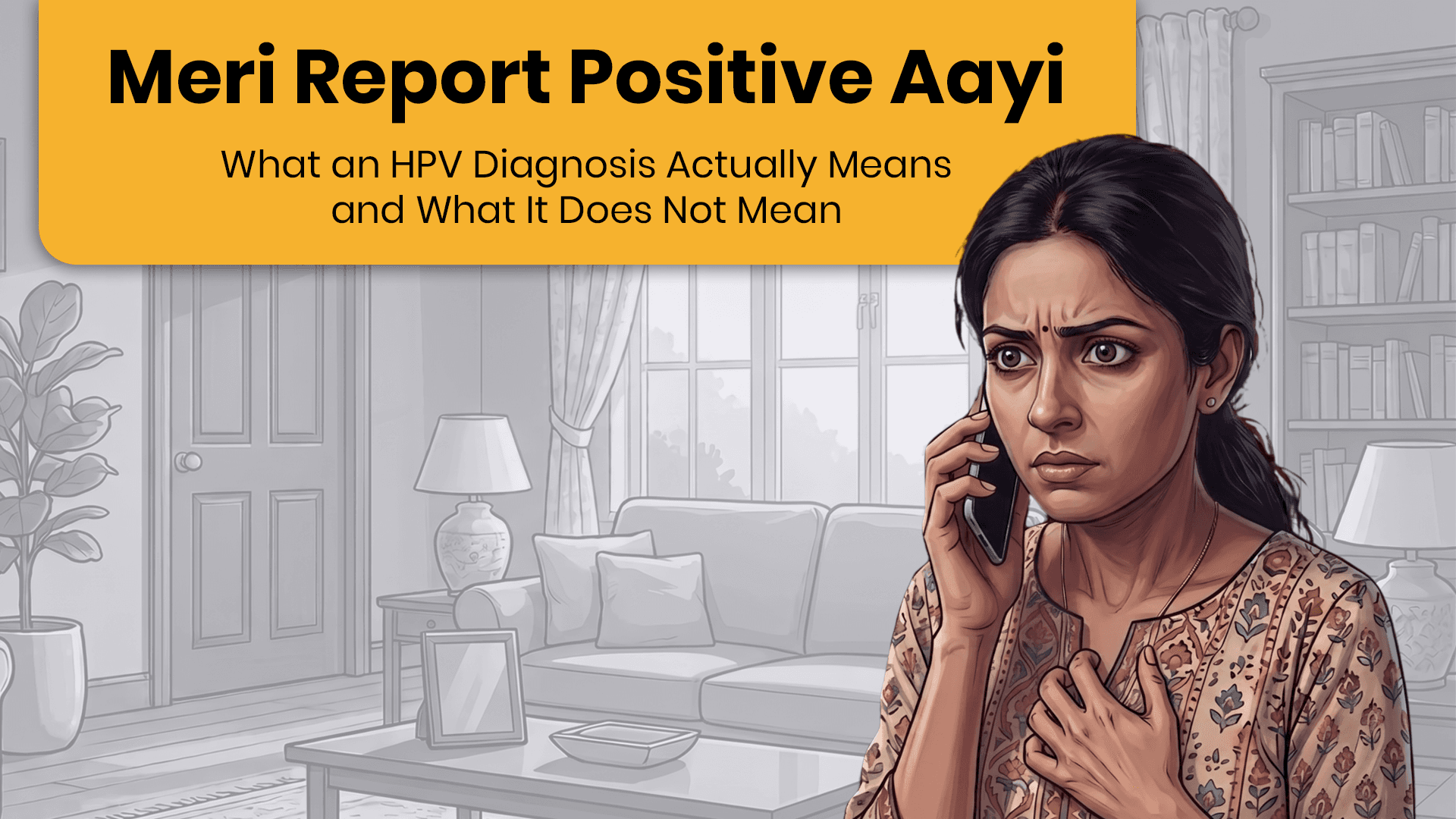
The phone rings. Or you open a message from the lab. HPV positive. The first thought that crosses your mind is not medical. It is personal. Matlab dhoka diya? Matlab cancer hoga? Matlab maine kuch galat kiya?
None of those conclusions are correct. But every single one is common, because nobody explained what HPV is before they tested you for it. The test came before the education. That order is broken, and it breaks people.
Sochne wali baat: A diagnosis without context is not information. It is ammunition for anxiety.
First things first: HPV-positive does not mean cancer. Most HPV infections clear on their own. Your immune system handles them - often within 12 to 24 months - without you ever knowing you had them. Only a small number of high-risk strains, if they persist over many years without monitoring, can cause precancerous cell changes. Even then, regular screening detects these changes early enough to treat them with high success rates.
A positive report is a signal to pay attention. It is not a signal to fall apart.
Now, the second myth, and this one wrecks relationships: HPV is not evidence of infidelity. The virus can remain dormant in the body for years - even a decade or more. A positive result today tells you nothing about when or from whom you acquired it. It could be from a partner five or ten years ago, or from a relationship you have entirely forgotten. Blaming your current partner is medically inaccurate, emotionally destructive, and unfair to both of you.
Let us be clear: If your first reaction to an HPV diagnosis is "who cheated?" - you are asking the wrong question. The right question is "what should I do next?"
What happens after a positive result? Your doctor will determine which strain was detected. Low-risk strains (such as HPV 6 and 11) may cause warts but are not linked to cancer. High-risk strains (mainly HPV 16 and 18) require closer monitoring. Typically, you will have a follow-up test in 12 months. If the infection persists, a colposcopy - a closer examination of the cervix - may be recommended. If abnormal cells are found, they can be treated with minor procedures, well before they become cancerous.
The whole point of screening is to catch things early. That is exactly what your positive result is doing - catching things early. It is doing its job. Now do yours: follow up.
Think about this: The most dangerous response to an HPV diagnosis is not fear. It is avoidance. Missing your follow-up appointment is riskier than the virus itself.
A Word for Parents
If your daughter shares her HPV diagnosis with you, she is trusting you with something deeply personal and medically sensitive. Do not Google worst-case scenarios in front of her. Do not call three relatives. Do not assign blame - not to her, not to her partner. Ask what the doctor said. Help her keep her follow-up appointments. And remind her that this is manageable, common, and not a reflection of who she is.
Here is what stays: She came to you. That took courage. Honour it by being the parent she hoped you would be, not the one she feared.
TSSF team is eager to hear from you - write to us at info@sunitisolomon.org or call us at 044-28363200.
#HPVPositive #HPVAwareness #HPVIndia #KnowYourReport #CervicalHealth #CancerPrevention #HealthEducation #MedicalAwareness #WomensHealthIndia #SexualHealthAwareness #BreakTheStigma #StopTheMyths #HPVTesting #ScreeningMatters #EarlyDetection #PreventiveCare #HealthLiteracy #InformedDecisions #FollowUpCare #YouAreNotAlone #CommonInfection #NoShameInHealth #MythVsFact #StayInformed #DoctorGuidedCare #HealthSupport #ManageableNotFatal #PublicHealthIndia #TrustTheProcess #AwarenessSavesLives #TSSFBlogs