There are things Indian women are not supposed to talk about. The list is long enough to fill a library. But near the top, sealed behind propriety, tradition, and the phrase "ghar ki baat ghar mein rehni chahiye," sits this: what happens in the bedroom after the shaadi.
Not the reception jokes. Not the blushing innuendos. The actual experience. Whether it is wanted. Whether it is enjoyable. Whether it happens at all. And whether anyone bothered to ask the woman how she feels about it.
Sochne wali baat: A woman's sexual experience within her marriage is treated as everybody's joke and nobody's concern. How did we get here?
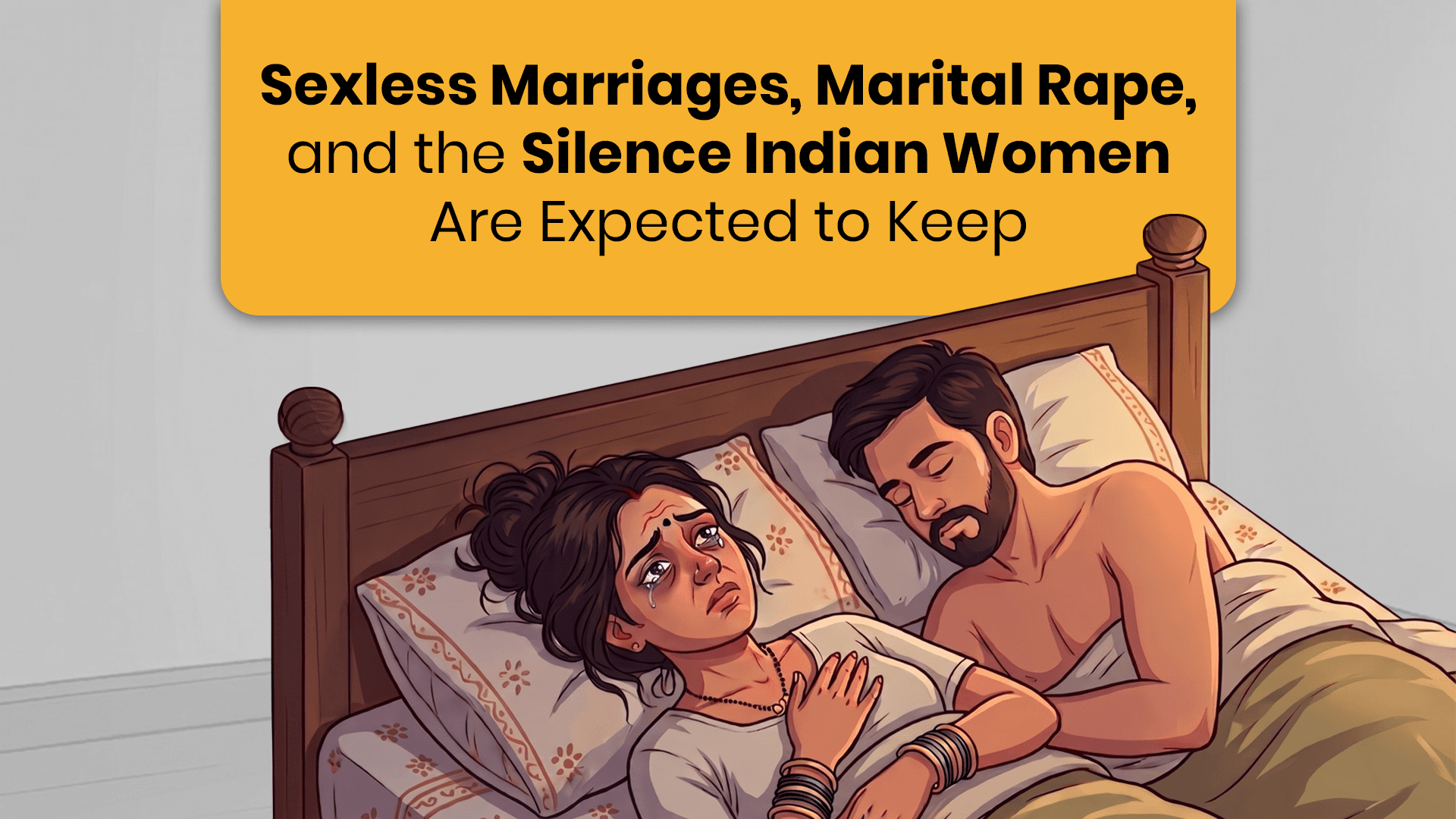
Sexless marriages exist in India. Far more than anyone admits. Sometimes the cause is medical. Sometimes it is emotional distance that has grown wider than the bed. Sometimes one partner simply does not desire the other, and neither knows how to say it because the vocabulary for this conversation was never taught. In a culture where talking about sex is already taboo, discussing its absence within a marriage is nearly impossible.
But the larger silence - the more dangerous one - concerns consent. Indian law, as it stands, does not recognise marital rape as a crime when the wife is over 18. The legal position holds that marriage implies ongoing consent. Reflect on that. A ceremony held on one day is treated as permanent permission for every day that follows. Regardless of how the woman feels. Regardless of what she says. Or cannot say, because she has internalised that "no" within marriage does not count.
Let us not look away: When a woman's body belongs to a contract rather than to herself, what exactly are we calling marriage?
Emotional coercion is another reality that has no name in most Indian households. It looks like guilt-tripping. "If you loved me, you would." It looks like sulking for days until she gives in. It looks like anger that leaves her too afraid to refuse. None of this involves physical force. All of it violates her agency.
For women experiencing this, resources are available. The Women Helpline (181) operates across India. The National Commission for Women can be approached for guidance. One Stop Centres (Sakhi Centres) in many districts provide legal aid, counselling, and temporary shelter. Protection Officers under the Domestic Violence Act can be contacted through the local magistrate.
Consent does not expire at the mandap. It is required every time. In every relationship, including - especially - marriage.
Consider this: Pleasure is not a privilege reserved for men. Refusal is not a crime committed by wives. Until India accepts both statements, we have work to do.
A Word for Parents
This is difficult to read. It is even harder to live. If your daughter is in a marriage where her boundaries are not respected, where she feels she cannot refuse, where she dreads nightfall - she needs to know that your door is open. That leaving a harmful situation is not shameful. That you will stand with her, even when it gets complicated and especially when it becomes public.
Ruk ke socho: Your silence on this teaches her what to tolerate. Which will you choose - comfort or your daughter's safety?
TSSF team is eager to hear from you - write to us at info@sunitisolomon.org or call us at 044-28363200.
#MaritalConsent #ConsentMatters #WomensRightsIndia #MaritalRape #EndMaritalRape #SexlessMarriage #MarriageRealities #BreakTheSilence #SpeakUpIndia #WomensSafety #DomesticViolenceAwareness #RightToConsent #MyBodyMyChoice #GenderJustice #IndianWomen #HiddenAbuse #EmotionalAbuse #ToxicRelationships #HealthyRelationships #SexualRights #LegalAwarenessIndia #WomenEmpowerment #StopViolenceAgainstWomen #NoMeansNo #SilenceIsNotConsent #MarriageAndConsent #EndTheStigma #RespectBoundaries #SafeSpaces #ListenToWomen #TSSFBlogs